

Introduction
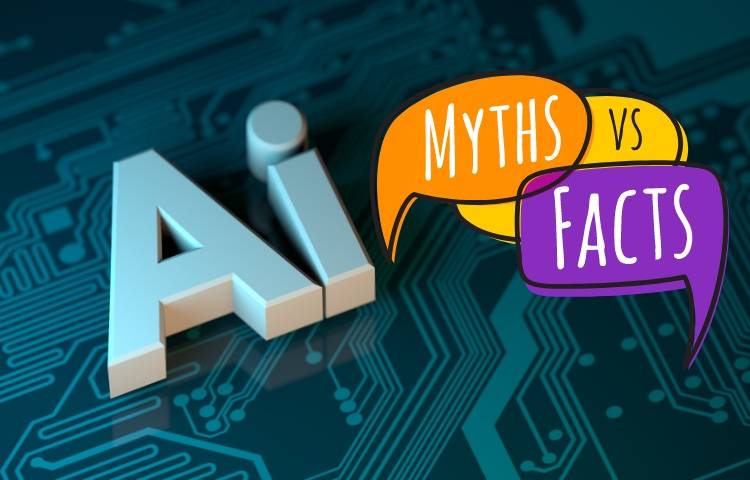
Artificial Intelligence (AI) is one of the most popular technological trends today that also has a lot of misconceptions and myths about it. Many believe that AI has the ability to think and feel as humans do, that it will eventually take over all of our jobs, or that it will be capable of making 100% of its own decisions.
The reality is that AI is just a tool created by humans that operates based on rules, algorithms, and data. For anyone using technology or wanting to be informed about how AI will affect their lives, knowing what are the myths of AI compared to the facts is essential.
This article will cover some of the most common AI myths and provide the facts behind them. By understanding the truth about AI, you will have a better understanding of what AI can do, its limitations, and how it can be applied in the real world.
Whether you are a business owner, student, or technology expert, being aware of what AI can and cannot do will allow you to make informed decisions, utilize AI in an ethical manner, and avoid unnecessary concern or misconceptions concerning AI. While AI is an incredible technology with a lot of potential, understanding the difference between myths and facts will help us appreciate this technology and prepare for its continued advancement.
Common AI Misconceptions
“All Human Jobs will be Replaced by AI”
The belief that AI will replace all jobs remains the most common misconception. In reality, AI in 2026 is viewed as a “co-pilot” or “writing assistant” rather than a replacement.
While AI handles repetitive and low-level tasks, humans can dedicate time to higher-level strategy, creative thinking, and emotional intelligence. According to industry experts, AI will eliminate certain jobs and create entirely new positions including AI ethicists and prompt engineers.
“You Must Have Perfect Data Before Starting an AI Project”
Many organizations delay their AI projects by trying to “cleanse” their data and ensure it is perfect before commencing with the project. As of 2026, the majority of modern Artificial Intelligence models are built with the understanding that the data being utilized will be “messy” and will evolve over time.
Waiting until there is perfect data will lead organizations into “pilot paralysis” and subsequently allow their competition to move ahead of them.
“AI is 100% objective and infallible”
AI is viewed by many industry professionals as an unbiased “oracle” that provides unbiased or objective results. In reality, AI models include human-imparted biases in the data upon which they are trained.
Furthermore, AI continues to produce “hallucinations“, or inaccurate results, that require human input in order to verify whether they are accurate and ethically sound.
“The cost of AI makes it impossible for everyone except large tech companies to purchase it”
Previously, purchases of$ AI were typically limited to technology companies with deep pockets, however from 2026 onwards even small-to-medium sized enterprises (SMEs) can benefit from their capabilities.
Many foundational tools can now be purchased as standalone subscriptions for around £20-30 per month and as a result the barriers for entry regarding AI can be significantly reduced through the use of cloud-based AI tools that follow a “pay-as-you-go” approach.
“You can utilise AI with minimal-to-zero configuration required”
Many consider AI tools to be a “plug-and-play” approach for a variety of reasons. However, this is certainly not the case. Effective use of AI requires proper set up, customisation and regular upkeep. AI must be treated as an evolving, probabilistic system that needs to be continually evaluated in order for success, rather than as a one–off software deployment.
“AI Search Will Eventually Replace SEO”
One of the primary marketing myths that exists today is that the emergence and acceptance of AI-driven search methods have effectively rendered traditional SEO techniques completely irrelevant. The truth is, both quality content (that is well structured) and the fundamental properties of SEO (e.g. authority, relevance, etc,) are as important as they have ever been for AI driven search engines to understand and trust your business/brand.
Reality of AI Jobs
Many people believe Artificial Intelligence will eliminate all human jobs; however, the truth is more complex than that. AI works best for automating tasks that are repetitive and routine, as well as tasks needing data analysis and data processing (e.g., data entry), which means that there will likely be less demand for employment when AI takes on repetitive and routine type tasks (such as data entry) or for specific types of processes (such as certain forms of manufacturing).
However, while AI will reduce some job requirements for specific types of jobs, it will not eliminate the need for skilled workers. Rather, AI will create a demand for new jobs that relate to AI development, machine learning, data analysis, and maintenance of AI systems, in addition to jobs that have traditionally existed.
Job functions which require human employees and AI to work together are also becoming more prominent. AI can assist with the analysis of large amounts of medical information in healthcare; however, human doctors will always be needed to interpret the results, to provide empathy, and to make ethical decisions.
In the field of marketing, AI can assist with automating ad targeting and analyzing trends, but the human employee will need to continue to create the overall strategy, manage the campaign, and develop the creative content.
In conclusion, AI will create new shifting job demands, as opposed to completely replacing humans. AI will necessitate that employees upskill and reskill, as employees will need to learn how to work with technology as it continues to progress.
The reality of AI should encourage employers and employees to collaborate in the workplace to increase productivity, efficiency, and innovations without fear of the total loss of employment due to this technological advance.
AI and Privacy
Privacy is an important issue that has a significant role to play in AI (artificial intelligence) systems due to their dependency on data. The majority of AI systems use large amounts of data that include individual browsing history, geo-location, social media activity, shopping habits, and even medical records to provide individuals with recommendations and to optimize and automate process and services.
While these data enable AI to provide users with tailored recommendations, they also raise concerns surrounding the improper use, unauthorized access or disclosure of sensitive information.
One of the main issues with AI systems is that they can accidently expose users‘ personal information, allow companies to track users across multiple platforms and make biased and detrimental decisions about users due to poor system design.
To address concerns surrounding misuse of personal information and the lack of accountability from businesses that collect sensitive personal information, GDPR and CCPA have been implemented in Europe and the United States respectively.
As a user of AI software, it is important to understand the information you are providing to companies and how AI tools will use this information.
Companies and developers have the responsibility to provide users with information regarding how they are storing, securing, anonymizing, and processing user information.
Ethical Concerns
While Artificial Intelligence (AI) has the ability to benefit society in many ways, it also has a number of ethical issues that need to be addressed. A major concern with the use of AI is bias. Because AI relies on data created by people, it has the potential to create biased or discriminatory outcomes.
For example, AI could potentially create biases when deciding who to interview for job opportunities, what kinds of loans someone qualifies for, or which crime suspects a police officer should focus on. Without careful oversight, AI may perpetuate discrimination and social inequality.
Another major ethical concern is the issue of accountability. If an AI system recommends a course of treatment for a patient or approves a loan for an individual, and something goes wrong as a result of that recommendation or approval, it can be difficult to determine who is responsible. This creates many challenges related to legal and moral accountability for the actions of an AI system.
Privacy and surveillance are also ethical issues related to the use of AI. AI systems often collect and analyze vast amounts of personal information, and this information could be abused or exposed if the collection and analysis of information is not done in an ethical manner.
Additionally, automation from AI may displace jobs and disrupt people’s ability to make a living and maintain economic stability, which presents a moral challenge to society.
To mitigate these ethical issues, both developers and organizations involved in the development of AI must ensure that the practices used to develop AI systems incorporate transparency, fairness, and accountability.
The ethical development of AI requires thoughtful design, continuous monitoring, and regulation in order to maximize the potential benefit of AI while minimizing the potential for harm. Ultimately, developing AI ethically will allow individuals and society to utilize AI in a safe, ethical, and fair manner to further the common good.
You can also check out this post:
AI vs Human Intelligence Explained Simply
Technology Trends That Will Shape the Future
What Is Cyber Security and Why It Matters
Five Myths About Artificial Intelligence
Conclusion
Transformation from Instruments to Agents: In 2026, we see a transition from static AI tools to autonomous agents. Businesses now have the ability to not only write emails with AI but also use agents to coordinate full marketing programmes, manage supply chains and resolve complicated customer service situations independently.
Redefinition of Human Value: With AI managing the “execution” layers of work, we have a new definition of Human Value; successful professionals will be those that excel in the skills of AI orchestration, critical judgement and emotional intelligence – capabilities that machines do not possess at a Human level.
Trust as a Competitive Advantage: In the current age of AI-generated content and automated data processing, the new Currency is Brand Trust. As companies embrace data privacy, ethical transparency and human-in-the-loop verification, they will experience greater loyalty from customers and reduced regulatory risk.
Accessibility & Scalability: High-performance AI is no longer the purview of only Big Tech; Cloud-based platforms and Modular AI Agents are enabling small and medium enterprises (SMEs) to achieve unimaginable growth and efficiency previously only achievable with massive human resources.


Pingback: 5 Artificial Intelligence Basics: How AI Works
Pingback: How Online Tools Increase Work Efficiency (2026 Guide)
Pingback: 5 Technology Trends That Will Shape a Smarter Future