

Introduction
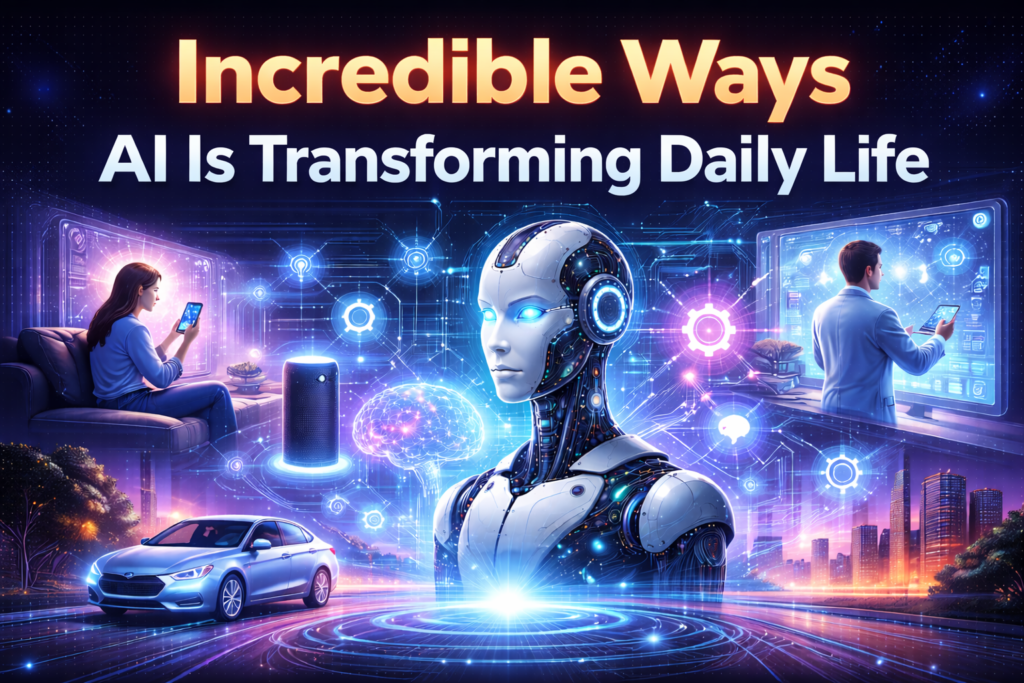
Every day millions of people use artificial intelligence (AI). AI has changed how we interact with our surroundings, and it continues to evolve daily due to changes to AI technology.
In addition to the way we communicate with one another, AI is changing the way we communicate with our devices. Smartphones are among the most widely used devices, and they are interacting with us differently than ever before, based on usage patterns and user preferences.
Smartphones now provide suggestions for new apps, assist in predicting typing patterns, and automatically manage our calendars and to-do lists. Many social media sites and streaming services have adopted similar technologies to help the user find content that matches their interests and that they like. As we become more accustomed to the availability of AI, we can see how it will continue to shape our daily lives.
With the introduction of smart assistants (e.g., Alexa, Google Assistant, Siri), we are gradually seeing the convenience of controlling everything from our lights to our shopping lists through voice commands, making it easier and quicker to complete daily chores.
AI powers navigation apps, predicts traffic, and assists with the development of self-driving cars and trucks. In the finance sector, it enables users to protect themselves against possible fraudulent activities; automates banking, and helps users make better investment decisions.
In addition, AI provides health care providers with valuable data analysis services (for example, to evaluate patient records), assists in diagnosing patients, and suggests possible treatment options.
Many companies leverage AI to enhance the experience of their customers, streamline their businesses, and make better business decisions based on data that is generated and collected by their businesses.
Artificial intelligence and its impact on everyday life by

AI in Smartphones
The core artificial intelligence features that will be available in 2026 will include the following:
Generative Photos & Videography: Samsung’s Generative Edit and Google’s Magic Editor represent a major trend in photo and video editing technology by allowing end-users the capability to reposition subjects and add to existing image background while eliminating unwanted items with realistic, intelligent in-filling (AI) techniques. The 2026 version of these apps will additionally add an Auto-trim feature that will automatically create highlight reels from video libraries.
Search (Circle to Search): Users will have the ability to Circle, highlight, or Tap any text or image within their mobile application, allowing for instant Google searches without switching applications.
Real-Time Communication: Live Translate: Provides real-time translations of digital telephone and live face-to-face conversations. Writing Assist: Allows changes to the tone of message newsletter-type communications (from formal to casual, and vice versa), and provides users with real-time grammar corrections (for example, by correcting grammatical errors in their writing).
Personal Productivity: Now Briefs and Now Bars: These provide users with contextualized daily reminders of existing appointments or tasks scheduled for the day, along with predictive weather conditions based on their location, energy scores (based on the user’s energy consumption), and a quick summary of what else is scheduled for that day. In addition to these two capabilities, AI will be able to transcribe and summarize recorded or spoken voice notes or digital telephone calls into actionable items.
Hardware & On-Device Processing
With the rise of AI apps, many of today’s smartphones use dedicated AI chips called Neural Processing Units to allow local processing instead of cloud processing of the user’s AI tasks.
Privacy: By processing AI tasks locally using the user’s device, the user keeps sensitive information (biometric data and personal conversations) private.
Performance: With very little latency and improved power efficiency provided by leading smartphone processors, such as the Qualcomm Snapdragon 8 Elite and the Google Tensor G5 chips, end-users can experience better performance when using AI phone apps.
Optimization: By managing battery consumption and optimizing system resources, AI learns how to anticipate the habits of its users (for example, preloading frequently used apps).
Key Innovations
Application-Free Experiences: Innovative platforms, including Honor’s Magic Portal and partnerships like T-phone (Deutsche Telekom/Brain.ai), have shifted from having individual apps for an end user’s use to a single AI “concierge” to assist the user in identifying and achieving their goals.
Hybrid AI Models: Several applications use both mobile hardware and the cloud to achieve complex results. An example of this is Google® Video Boost, where the local device performs basic functions and the cloud offers larger processing capabilities.
Monetization: With the emergence of alternative monetization strategies, companies are increasingly offering subscription-based services to support advanced generative capabilities for AI products consuming significant cloud processing power (e.g., Google One® AI Premium Service).
AI in Online Services
As of 2026, Artificial Intelligence has transitioned from an experimental phase to a key component of online service infrastructure. The experimentation phase is complete and the focus of online services is now to provide measurable Return on Investment (ROI) via autonomous operational capabilities and the hyper–personalization of their offerings.
The following are key developments in online services that occurred in 2026:
Autonomous customer service – AI has evolved from being a “copilot” (supporting human operators) to becoming an autonomous agent capable of fulfilling all inquiries for high–volume customer service requests (e.g., refund, billing, technical support) without any human assistance.
Predictive & hyper-personalize banking – The retail banking industry is proactively operating due to the utilization of AI “financial copilots” (such as Bank of America’s Erica) to anticipate cash flow needs, schedule automatic savings deposits and to provide clients with real-time cash flow wellness coaching.
Intelligent streaming & entertainment – Search functions on streaming services have evolved from being title based to intent-based (using mood, theme, etc.). Other innovative technologies that have become more common include interactive storylines (e.g., adapting plotlines based on heart rate and/or facial expressions) and the utilization of AI-optimized content delivery networks (CDNs) that reduce content buffering time by 30%.
Proactive e-commerce – An emerging trend is the utilization of “digital body language” to detect whether or not a customer is hesitant when purchasing an item; then, retailers can provide real-time personalized discounts or suggest complementary visual items to prevent cart abandonment.
Key changes in technology
New Types of Interfaces: Companies now offer solution services that interpret multiple forms of input simultaneously to achieve the goal of solving a customer’s request. One example is a customer will send in a picture of a damaged phone and receive a video tutorial to help them fix it, all from artificial intelligence.
Memory-Rich Artificial Intelligence: In 2026 and beyond, Artificial Intelligence will be able to retain long-term memory of client preferences, their past requests and the client’s personal context from any customer service location (such as email, chat or voice).
Trust & Ethics: The notion of “Trust as a Performance Metric” is now becoming important. Institutions will be required to demonstrate to clients how their decision was made through use of “explainable AI” or XAI, such as why a client was declined a loan or why their refund request was denied. In order to meet the stricter regulations for providing these types of customer services globally, such as through the EU AI Act, many institutions are still figuring out how to fulfill all of the requirements for providing such services.
Challenges/Risks
Data Integrity Crisis: The availability of increasing amounts of synthetic data is now polluting many central repositories within banks and service providers. Because of this issue, banks and financial institutions will need to start creating what are now being called “Data Purity Vaults” that will guarantee the integrity of original source data.
The “Human Gap”: Because nearly all client interactions are handled by AI operating in a 24/7 basis, there is an associated “loss of meaningfulness” for human employees in relation to their job duties. Approximately one-half of customers are concerned about the potential loss of a human’s ability to exhibit empathy when assisting clients with their requests.
Agent Spikes: Brands are experiencing sudden “Agent Spikes,” which are periods where brands receive increased call volumes, not from clients, but rather from AI Agents built by customers to effectively complete tasks such as bulk purchase of tickets or entering contests.
AI in Healthcare
Clinical Diagnostics and Imaging
Pattern recognition from artificial intelligence has become a common instrument to assist in high-volume Diagnostic specialties.
Radiology: As of mid-2020, over 75% of the FDA-approved medical devices leveraging artificial intelligence are specifically in the field of Radiology. Artificial intelligence is assisting in automatically pre-sorting cases, including elevating critical results such as stroke to the top of a Neurologist’s worklist, allowing for better use of Neurologist’s time.
Early detection: Artificial intelligence models are detecting early signs of heart failure and sepsis between 7-10 days in advance of human signs and symptoms. This detection is based on subtle biometric measurements.
Pathology: Automated analysis of a digital scan of blood (smear) with a machine can classify and count leukocytes in seconds at an accuracy level equal to a human expert and perform the analysis of hundreds of slides an hour.
Remote Patient Monitoring
Remote Patient Monitoring has progressed from basic monitoring of vital signs into “active triage” systems.
Wearable Device Integration: Roughly 40% of people in the United States use some type of wearable device such as a smartwatch or biosensor that connects to an artificial intelligence platform that collects real-time data on the patient and is being used to help patients manage their chronic conditions (i.e.: diabetes and hypertension).
Hospital Impact: Hospitals implementing large-scale AI-enabled Remote Patient Monitoring (RPM) have reduced the number of 30-day hospital readmissions by up to 38% for patients with chronic conditions.
Predictive Care: Some of the available AI “Energy Scores” and personalized Health Trackers (such as those from Samsung) offer one-to-one support to patients by allowing them to receive daily feedback based on their personal biology and activity levels.
Drug Discovery and Gene Editing
To address the threat posed by the “patent cliff” of the late 2020s, the pharmaceutical industry is adopting an “AI first” approach to R&D.
Accelerated Growth to Market: The speed with which generative AI creates millions of chemical compounds, in just weeks, results in a 70% reduction in time needed to develop lead compounds.
CRISPR and AI: Artificial Intelligence is now functioning as a “co-pilot” to CRISPR gene-editing technologies, facilitating faster and safer experiments on treating genetic disorders such as cystic fibrosis and muscular dystrophy.
Synthetically-Generated Patient Data: To protect patient privacy, the development community is increasingly using synthetic patient data generated by AI to create models and simulate clinical trials.
Administrative Efficiency and Improved Operations
AI tools have primarily been introduced to alleviate physician burnout by automating “Pajama Time.”
Ambient Scribes: Microsoft Dragon Copilot and Heidi Health’s automated transcription services turn patient visits into organized clinical notes. Physicians can now save approximately 10 hours per week.
Revenue Cycle Management: AI agents now manage the entire process of billing, processing claims, and obtaining prior authorizations; therefore, manual tasks related to administration have decreased by approximately 30%.
Regulatory and Economic Changes
Medicare Adds Standardized Reimbursement: Beginning in January 2026, Medicare will reimburse physicians at a national base of over $1,000 for the use of specific AI-based coronary plaque assessments.
AI in Education
Key uses of Artificial Intelligence (AI) in Education
In 2026, there are generally four categories of core functionality of the AI tools used in education:
Adaptive Learning and Tutoring – Examples of this are Khan Academy’s Khanmigo and Duolingo that employ AI to modify the content and pace of delivery for a student based on real-time performance.
Intelligent Assessment and Feedback – An example of this is Gradescope and Turnitin, that are capable of automating the grading process and providing detailed and rapid feedback to students, thereby shortening the traditional “feedback loop” from a few days until seconds.
Teacher Workload Automation – AI has the ability to remove repetitive paperwork from teachers’ calendars such as lesson planning and attendance tracking, potentially freeing up to 13 hours weekly for teachers.
Accessibility and Inclusion – AI-based speech-to-text, text-to-speech, and interpretation tools that provide real-time translations for students with disability or students studying in a non-native language.
Major Concerns and Ethical Risks
In 2026, widespread acceptance and use of AI tools in education have led to a number of concerns.
Academic Integrity – The convenience and readily available generative AI tools used by students for their assignments continue to provoke discussions regarding issues associated with plagiarism and the degradation of critical thinking skills among students.
Algorithmic Bias – AI is often trained on poor–quality data, making it susceptible to perpetuating and promoting social and cultural bias in its recommendations and assessments.
Data Privacy – The large quantity of data gathered from students on a continually growing scale triggers major privacy and security concerns regarding education and surveillance.
Benefits and Risks
Artificial Intelligence (AI) presents many benefits for making life easier, faster, and more efficient. The automation of repetitive tasks through AI results in fewer human resources, as well as the opportunity to save significant amounts of time. Decision making can be enhanced and more accurately accomplished by AI because it is able to analyze large quantities of data in a short period of time, thus allowing business, medical and research professionals to have more access to correct information.
Personalized experiences, such as product recommendations, personalized education through adaptive learning, and AI driven healthcare solutions improve the overall convenience and effectiveness of these types of services. The innovation and technology provided by AI have allowed for the development of self-driving vehicles, smart homes, and advanced robots, which would have seemed impossible only a short time ago.
However, along with the benefits of AI, there are also associated risks that need to be managed carefully. The first major risk is the displacement of employees from the workplace due to automation taking over certain roles performed by humans. A second significant concern related to AI is the issue of data privacy and security resulting from the analysis of personal and/or sensitive data needed by AI.
Thirdly, the use of biased training datasets can lead to discrimination in hiring, lending, and law enforcement applications based on an AI algorithm’s processing of that data. Lastly, there is a risk of over-reliance on AI systems for decision-making and an inability to critically think about the findings of those systems. While AA will represent remarkable progress in society, it will be necessary to strike a balance between the benefits of AI and ethical and responsible use of the technology in order to have a positive and safe impact on society.
You might also be interested in reading:
How Smartphones Work Internally
AI vs Human Intelligence Explained Simply
How Technology Is Improving Modern Life
How AI Tools Improve Productivity
Conclusion
The revolution brought by artificial intelligence (AI) is impacting how people live, work and communicate across many dimensions including smartphones, the internet and healthcare. AI enables users to accomplish tasks in ways that are more intelligent, fast and individualized than ever before.
It also provides the ability for computers to “learn” through experience and makes it possible for humans to increase both their productivity as well as the number of technological advancements occurring throughout society. In addition to these benefits, AI poses many potential risks such as automation of jobs, security breaches due to misuse of data and the existence of biased programming in many applications.
Therefore, a key to the future development of technology will be how each individual uses artificial intelligence ethically and responsibly to maximize its advantages, enhance quality of life and promote continued innovation. Moreover, as technology advances, the importance of understanding the applications, benefits and risks associated with its use will grow as we enter an era of advanced use of artificial intelligence.

Pingback: 5 Artificial Intelligence Basics: How AI Works
Pingback: 5 Ways Technology Improves Modern Life Quickly